

MAIIC-NABARD Peer-to-Peer Exchange: Building Institutional Readiness for GCF Accreditation
Through an online exchange facilitated by the Agri-PDB Platform, MAIIC learned from NABARD’s GCF accreditation journey. The session connected accreditation requirements with institutional coordination, project programming and the preparation of GCF-ready projects.
MAIIC-NABARD Peer-to-Peer Exchange: Building Institutional Readiness for GCF Accreditation
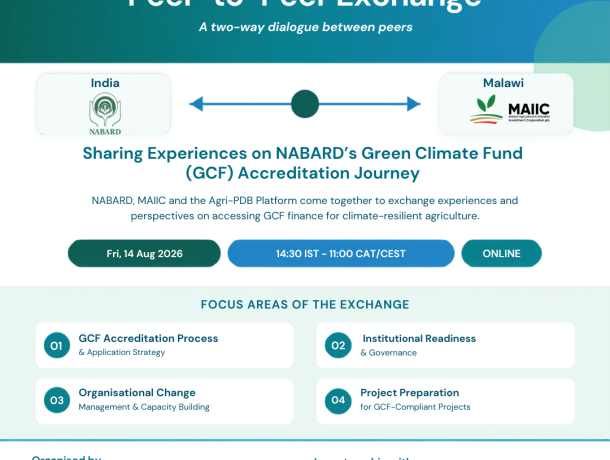
14 August 2026 | Online
In an online peer-learning session facilitated by the Agri-PDB Platform, the Malawi Agriculture and Industrial Investment Corporation (MAIIC) and India’s National Bank for Agriculture and Rural Development (NABARD) exchanged practical lessons on Green Climate Fund (GCF) accreditation. The discussion connected the formal accreditation pathway with the institutional systems, coordination and project programming needed to make it work in practice.
NABARD brought extensive experience to the exchange. It was accredited as a National Implementing Entity of the Adaptation Fund in 2012 following a due diligence process, and was subsequently accredited by the GCF and the Loss and Damage Fund. Drawing on this experience, NABARD’s Department of Climate Action and Sustainability (DCAS) presented the institution’s GCF accreditation journey. The presentation situated accreditation within the wider GCF architecture: developing countries access GCF resources through Accredited Entities (AEs), which partner with the GCF and countries to develop and implement projects. The National Designated Authority (NDA) serves as the formal interface between the country and the GCF, helping align accreditation and project development with national priorities. For direct access entities, the NDA’s role includes nomination and early engagement on country ownership and the no-objection process.
Two accreditation approaches were discussed. Institutional accreditation is a broad review of an organisation’s systems and standards and can support the development of multiple projects. Project-specific assessment is narrower: it examines whether a proposed entity has the capacity and systems required for one identified project. Under the revised institutional pathway presented by NABARD, the process moves through five steps – nomination or self-nomination, pre-screening, application, screening and review, and a final Board decision. Pre-screening is the mandatory early test of eligibility and institutional capacity.
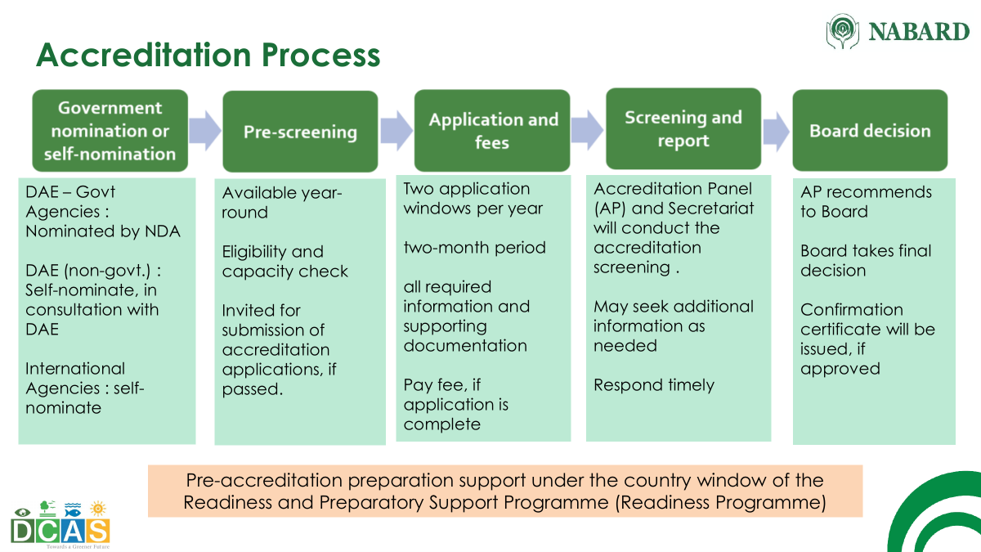
Figure 1. The five-step GCF accreditation pathway presented during the exchange. Source: NABARD presentation.
Accreditation as an institutional process
NABARD framed accreditation as a six-part institutional process: organise, plan, assess, map, evidence and respond. A dedicated workplan identifies requirements, responsible departments, evidence, deadlines and status. A candid gap assessment then separates missing policies from gaps in implementation. Mapping each GCF requirement to an existing institutional process helps the applicant build on what already works instead of creating parallel procedures.
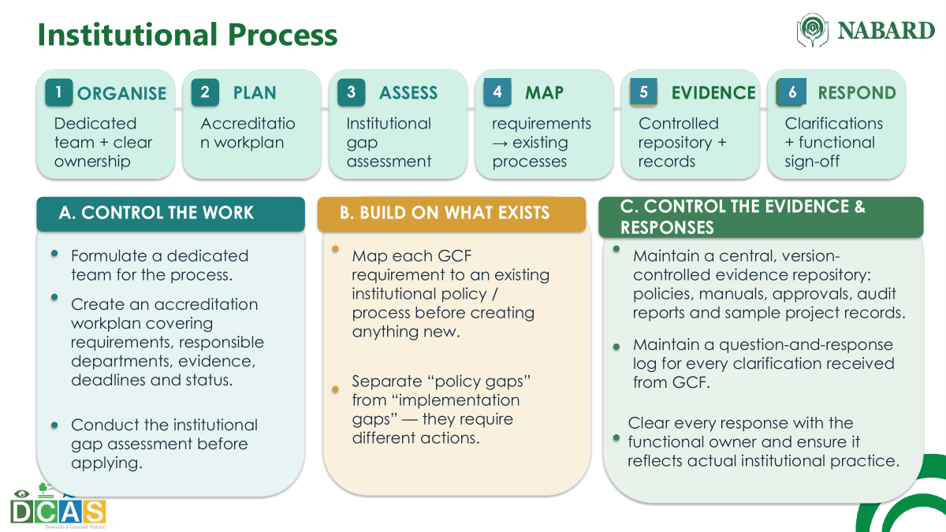
Figure 2. A six-part institutional process for managing accreditation. Source: NABARD presentation.
Inter-departmental coordination is therefore essential. Senior management owns the accreditation outcome, while one nodal coordination unit manages the workplan, evidence, timelines and GCF interface. Finance and accounts; risk, compliance and audit; legal and governance; environmental and social safeguards and gender; and project or business functions remain responsible for compliance in their own areas. Clear authority, internal escalation and Board or committee oversight help resolve gaps without placing the entire burden on a climate team.
Evidence must be managed just as carefully as policy. A central, version-controlled repository can bring together approved policies, manuals, audit records and examples from actual projects. A question-and-response log and functional sign-off help the institution give the Accreditation Panel one consistent answer supported by actual practice. This also preserves institutional memory when staff or responsibilities change.
From accreditation to GCF-ready projects
Accreditation is only one part of the wider GCF programming cycle. The cycle starts with country and Accredited Entity work programmes and targeted project generation, followed by a concept note and full proposal development. It then moves through review, Board consideration, legal and post-approval arrangements, monitoring for performance and compliance, adaptive management, and finally evaluation, learning and closure.
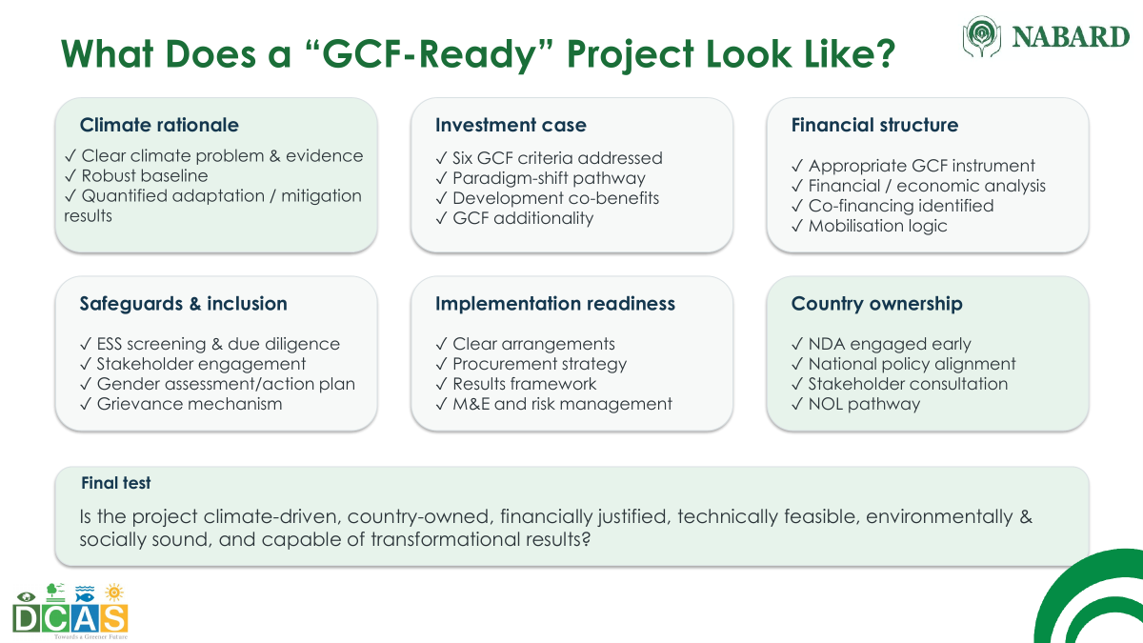
Figure 3. The main elements of a GCF-ready project. Source: NABARD presentation.
Within that cycle, project quality must be considered from the beginning. The slide above brings the main tests together: a clear climate rationale, a credible investment case and financial structure, safeguards and inclusion, implementation readiness, and country ownership. Early NDA engagement, national policy alignment and stakeholder consultation connect a technically sound project to the country’s priorities.
The practical message for MAIIC and other public development banks was straightforward: begin with an honest self-assessment, map GCF requirements to real institutional practice, agree clear departmental ownership and engage the NDA early. Accreditation is not simply a documentation exercise; it is a way to strengthen the institutional capacity needed to develop, deliver and learn from credible climate projects.
Questions and answers
- How can an institution address Indigenous Peoples requirements where it does not have a standalone policy?
NABARD explained that it addressed the relevant requirements through provisions in its environmental and social policy, informed by its experience with tribal development programmes. The central point is to demonstrate that the applicable safeguards are clearly covered and operational in the institution’s context.
- What does it mean to embed GCF responsibilities into normal governance?
Policies and practices introduced for accreditation should apply across relevant institutional operations, not only to GCF-supported projects. Accreditation should strengthen the organisation’s normal governance and delivery systems rather than create a parallel process.
- What was one of the hardest gaps to close?
NABARD pointed to gaps in environmental and social safeguards and gender-related policies. Closing them required institution-wide policies, formal approval and evidence that the policies were being implemented.
- Where should an institution begin?
Start with a gap assessment or self-screening, then work with the National Designated Authority to understand the accreditation pathway and any suitable readiness support.
Similar articles