

Country mission - Strengthening development finance for greener and more inclusive agriculture in Malawi
Strengthening development finance for greener and more inclusive agriculture in Malawi
1-5 July 2024 | Lilongwe, Malawi
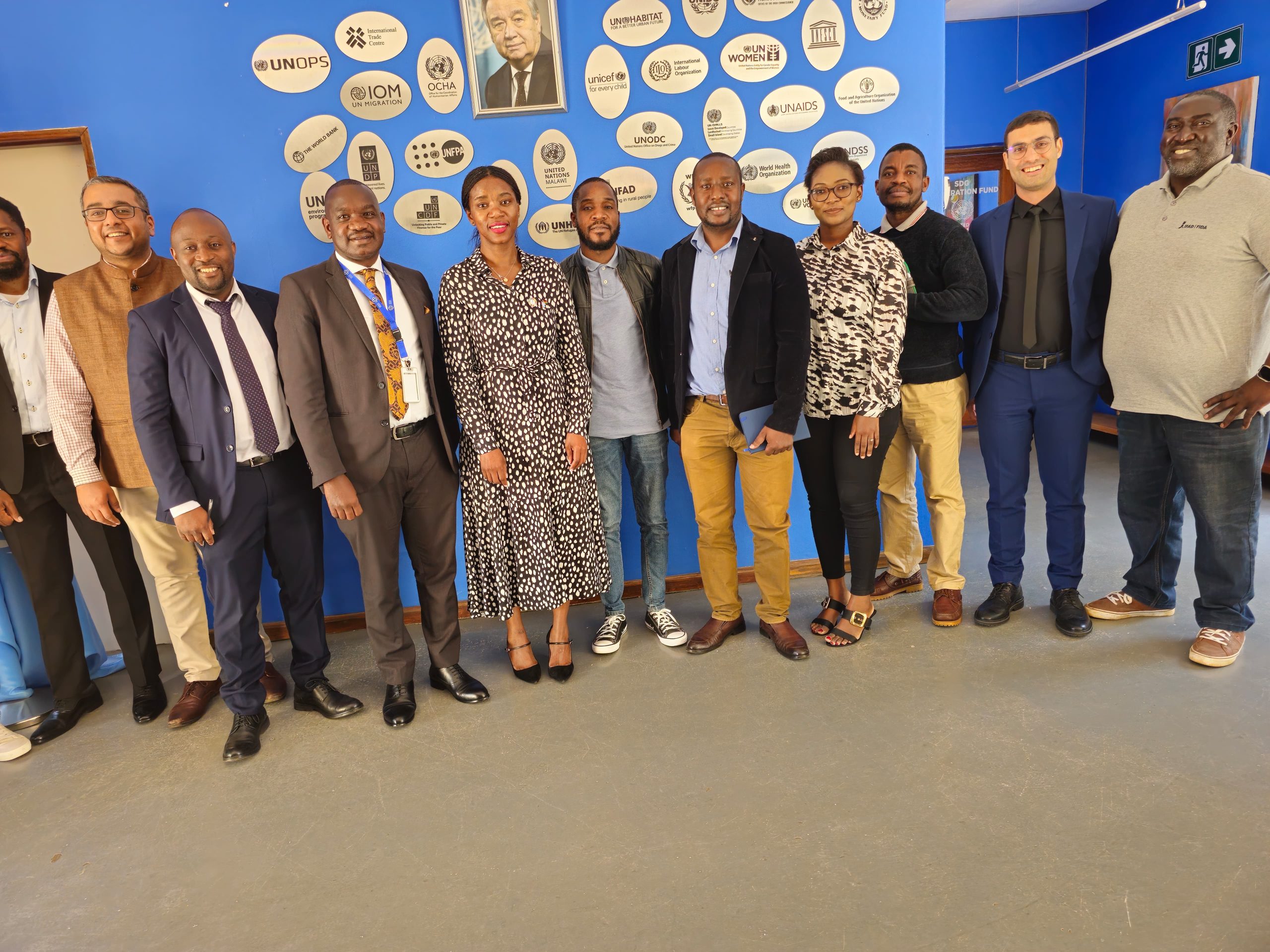
The Agri-PDB Platform conducted a mission to Malawi to support the Malawi Agricultural and Industrial Investment Corporation (MAIIC) in strengthening its contribution to sustainable agricultural development. Working with MAIIC, the IFAD Country Office and national and international partners, the mission mapped institutional needs and identified practical opportunities for capacity building, technical training and peer-to-peer exchange.
The discussions focused on how MAIIC can expand financing for small and medium-sized enterprises, smallholder farmers and agricultural value chains while integrating agroecology and environmental sustainability more systematically into its operations. The mission concluded with the foundations of an action plan covering staff development, green finance tools, risk assessment, monitoring and reporting, and collaboration across Malawi’s development-finance ecosystem.
Mission at a glance
- Map MAIIC’s needs against the Agri-PDB Platform’s main areas of support.
- Identify tools and training that can strengthen the appraisal, financing and monitoring of sustainable agriculture projects.
- Explore opportunities for peer learning on agroecology, green taxonomies and environmental indicators.
- Connect the proposed support with existing programmes and partner initiatives in Malawi.
- Develop a practical roadmap for capacity building, policy dialogue and resource mobilization.
MAIIC’s role in Malawi’s development
MAIIC is a public-private development finance institution created to mobilize long-term capital and catalyse investment in sectors that are central to Malawi’s economic transformation. Its instruments include debt and equity finance as well as partial credit guarantees, enabling the institution to support businesses and projects that may struggle to secure suitable long-term funding from conventional sources.
Agriculture and agro-processing are at the heart of this mandate. MAIIC works across value chains, supporting actors such as seed producers, input suppliers, smallholder farmers, financial intermediaries, processors and aggregators. Its agricultural portfolio has included beans, soybeans, groundnuts, rice and maize, alongside interest in the sustainability potential of the honey value chain.
The institution also places emphasis on small and medium-sized enterprises, women and young entrepreneurs. Through concessional facilities and national agricultural initiatives, MAIIC has helped finance productive assets and infrastructure, including irrigation equipment, farm machinery, storage and logistics. This positions the institution as an important bridge between public priorities, private investment and the financing needs of rural businesses.
Closing the agricultural finance gap
The mission highlighted a persistent challenge: the supply of affordable, long-term finance remains well below the needs of smallholder farmers and agricultural enterprises. High financing costs, limited concessional resources and the operational difficulty of reaching dispersed rural clients restrict the range of investments that can move forward.
Strengthening agricultural finance therefore requires more than additional capital. Financial institutions also need reliable tools to evaluate risks, identify environmentally sustainable activities and monitor results. Partnerships with local intermediaries can extend last-mile outreach, while better coordination among public institutions and development partners can connect technical assistance with investment resources.
For MAIIC, this creates an opportunity to further develop its value-chain approach. Financing several connected actors—from input suppliers and producers to processors and markets—can help reduce bottlenecks, improve the viability of individual investments and generate wider benefits across the rural economy.
Making green finance operational
MAIIC already considers environmental, social and governance factors when assessing projects. The next step is to make this approach more systematic and decision-oriented. During the mission, the institution expressed interest in strengthening its environmental and social assessment framework through clearer scoring, measurable indicators and consistent monitoring.
Several practical areas for collaboration were identified:
- Training on sustainable agriculture, agroecology and green finance.
- Development or adoption of a green taxonomy to help identify eligible projects.
- Application of tools such as the Adaptation, Biodiversity and Carbon Mapping Tool to assess environmental impacts.
- Stronger risk-assessment methods for agricultural and small-business borrowers.
- Capacity building on green bonds and sustainability-linked finance.
- Improved indicators and reporting for environmental sustainability.
Together, these measures can help translate broad sustainability goals into investment criteria that staff can use throughout the project cycle. They can also strengthen MAIIC’s ability to develop credible green investment pipelines and engage potential funding partners.
Building skills through peer learning
The mission confirmed strong demand for structured staff development. As development finance evolves, teams need expertise that combines agriculture, business analysis, environmental assessment and impact measurement. Practical training resources can help preserve institutional knowledge and give new analysts a consistent foundation for project appraisal, documentation and reporting.
Peer-to-peer exchanges with experienced agricultural development banks were also identified as a valuable route for learning. Exposure to tested approaches can support MAIIC in refining its business model, comparing tools and adapting international practice to Malawi’s context. Priority topics include financing and monitoring agroecological projects, green taxonomy development, corporate sustainability indicators and inclusive rural finance.
Partnerships around a shared agenda
The mission brought the Platform into dialogue with MAIIC, the IFAD Country Office, the Ministry of Finance, the European Union Delegation, the World Bank, UNDP and German development cooperation partners. These institutions are supporting complementary work on small-business finance, agricultural markets, rural inclusion, technical assistance and green investment.
Closer coordination can help ensure that capacity building is connected to real financing opportunities. It can also reduce duplication, improve the sequencing of support and create a stronger basis for policy dialogue. Partners highlighted opportunities to combine non-financial assistance with resource mobilization, helping MAIIC strengthen its systems while expanding the capital available for sustainable agriculture and rural enterprise.
Looking ahead: from diagnosis to implementation
The mission established a practical agenda for continued collaboration. Proposed next steps include developing a comprehensive staff capacity programme, delivering training on green finance tools and risk assessment, organizing peer exchanges, strengthening environmental indicators, and supporting dialogue with national and international partners.
The Agri-PDB Platform will continue working with MAIIC and the IFAD Country Office to prioritize activities, align them with ongoing initiatives and identify the resources required for implementation. The aim is not only to improve individual tools, but to strengthen the institution’s overall ability to identify, finance, monitor and report on investments that benefit farmers, enterprises and the environment.
By connecting institutional capacity, practical financial tools and partnerships, the Malawi mission has created a pathway towards a more inclusive and sustainable agricultural finance system—one capable of supporting agroecology, restoring natural resources and opening new opportunities across rural value chains.