

Country mission - From diagnosis to deployment: supporting greener agricultural finance in Mali
From diagnosis to deployment: supporting greener agricultural finance in Mali
June 2024 and April 2025 | Bamako, Mali
Two missions to Bamako illustrate how the Agri-PDB Platform turns institutional dialogue into practical support. The first mission, in June 2024, worked with the National Bank for Agricultural Development of Mali (BNDA) to identify the capabilities, tools and partnerships needed to finance agroecological and climate-resilient agriculture. The second, in April 2025, returned to advance that agenda through stakeholder coordination, operational guidance and the demonstration of digital agricultural credit tools.
Together, the missions mark a progression from needs assessment to an actionable pathway for implementation under the European Union-funded ILSA Programme.
The 2024 mission: listening across the bank
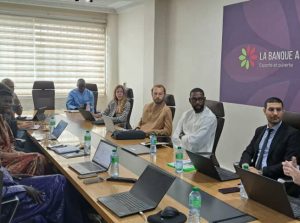
The first mission engaged several BNDA functions involved in agricultural finance, including business development, retail banking, strategy, research, risk and corporate social responsibility. It also opened dialogue with the IFAD Country Office, the European Union Delegation and development partners active in agricultural and green finance.
The consultations identified a broad set of needs:
- Technical tools for agricultural credit analysis and decision-making.
- Better digital management of financing applications and portfolio information.
- Stronger knowledge of the technical and economic characteristics of major agricultural value chains.
- Procedures tailored to agroecology and climate-smart agriculture.
- Improved monitoring, evaluation and impact reporting.
- Support for green-resource mobilization and climate-finance readiness.
- Peer exchange with agricultural development banks in the region.
Priority value chains included rice, maize, millet and sorghum, market gardening and livestock. Participants also discussed the potential of financing enterprises that supply organic soil amendments, animal feed and other solutions that can help producers adopt more sustainable practices.
Reaching producers through a stronger financial ecosystem
BNDA works with village associations, cooperatives, microenterprises and decentralized financial institutions to extend finance beyond conventional bank clients. The mission highlighted the value of strengthening these relationships so that finance can reach smaller producers more effectively.
Several structural constraints remain. Better agricultural data is needed on production areas, operators and value-chain performance. Collateral and guarantee requirements can also limit access for farmers. In this context, green credit lines, guarantee mechanisms, producer-support organizations and better-prepared financing applications can reinforce one another.
The mission also identified the need to build climate considerations into the bank’s commercial offer and risk management. This includes climate-risk scoring, exposure analysis and tools that help staff and clients understand how climate change may affect agricultural investments.
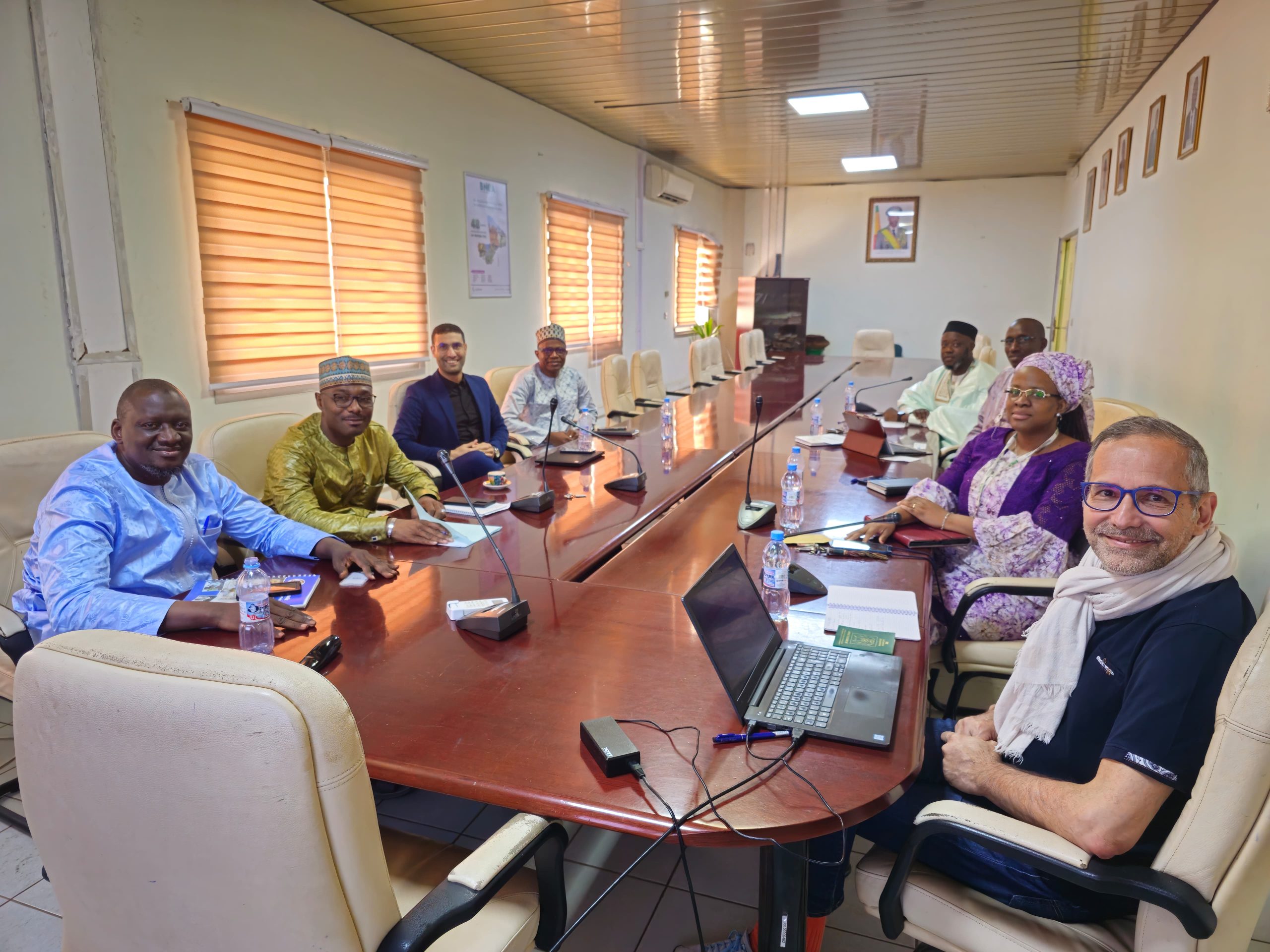
The 2025 mission: moving towards practical tools
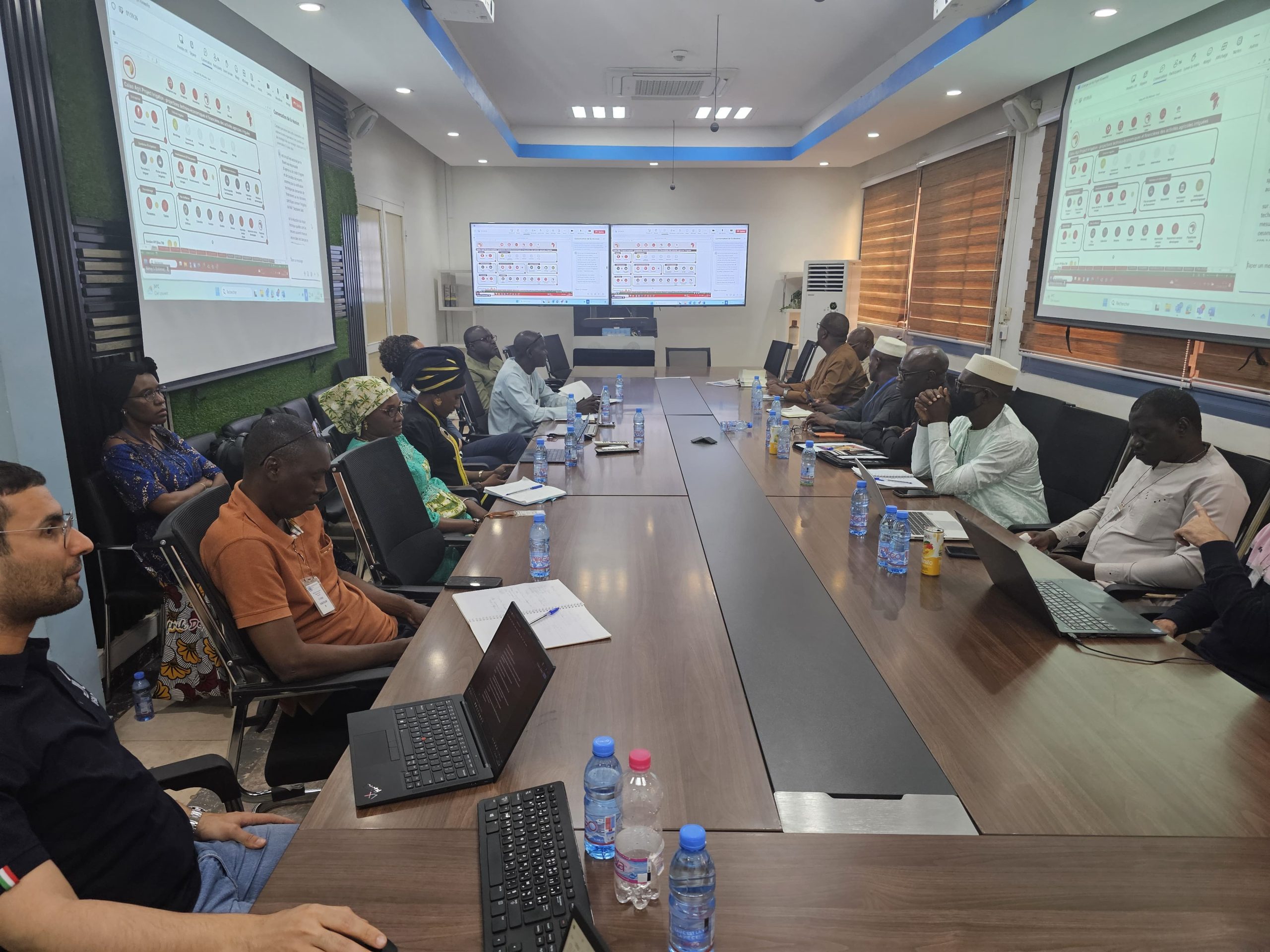
The follow-up mission in April 2025 built directly on the 2024 diagnosis. The Platform participated in the national validation workshop for the IGREENFIN Operations Manual and convened partners to discuss a coordinated approach to supporting BNDA.
A central part of the mission was the presentation of digital tools designed to strengthen agricultural project preparation and credit appraisal. The tools can model financing needs, irrigation and crop scenarios, working-capital requirements, cash flows and profitability. A proposed credit-rating approach brings together technical, financial, environmental and social dimensions.
Participants recognized the tools’ potential to improve the quality and consistency of investment analysis. They also emphasized that successful adoption will require training, technical support, clear internal ownership and alignment with BNDA’s existing procedures.
Coordination is part of the solution
Agricultural finance depends on more than the bank alone. Ministries, producer organizations, chambers of agriculture, value-chain bodies, technical projects and development partners all contribute data, training, project preparation or finance.
The missions therefore placed coordination alongside technology and training. Stakeholders reached broad agreement on the need for clearer roles, a regular consultation mechanism and stronger links between BNDA, agricultural projects and producer-support institutions. Better coordination can improve the quality of applications, reduce fragmented support and make new tools more sustainable after their initial deployment.
Proposed next steps
The joint agenda developed through the two missions includes:
- Finalizing a credit-rating grid that integrates agroecological criteria, subject to BNDA validation.
- Organizing targeted agroecology training for managers and operational staff.
- Integrating climate risks and non-timber forest products into project-analysis models where relevant.
- Clarifying the roles of BNDA, agricultural projects and chambers of agriculture in technical support.
- Establishing a regular space for consultation among partners.
- Exploring a pilot deployment of the digital tool in selected regions, subject to the bank’s technical and management approvals.
- Strengthening post-financing monitoring, including links with agricultural insurance and impact measurement.
A partnership built for the long term
BNDA is a founding and active member of the Agri-PDB Platform. The work in Mali shows the value of a long-term partnership that combines institutional knowledge, technical expertise and regional peer learning.
The path ahead is deliberately practical: adapt tools to the bank’s reality, build the skills needed to use them, coordinate the institutions that support producers and test the approach before wider deployment. These steps can help BNDA mobilize greener resources, improve agricultural credit decisions and expand finance for enterprises and producers contributing to Mali’s agroecological transition.