

FARM and Agri-PDB Platform Multi-actor Workshop Financing Adaptation of Agriculture to Climate Change
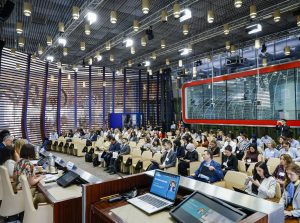
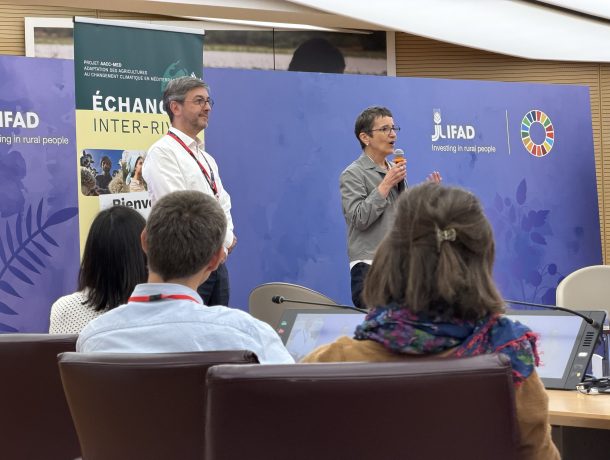
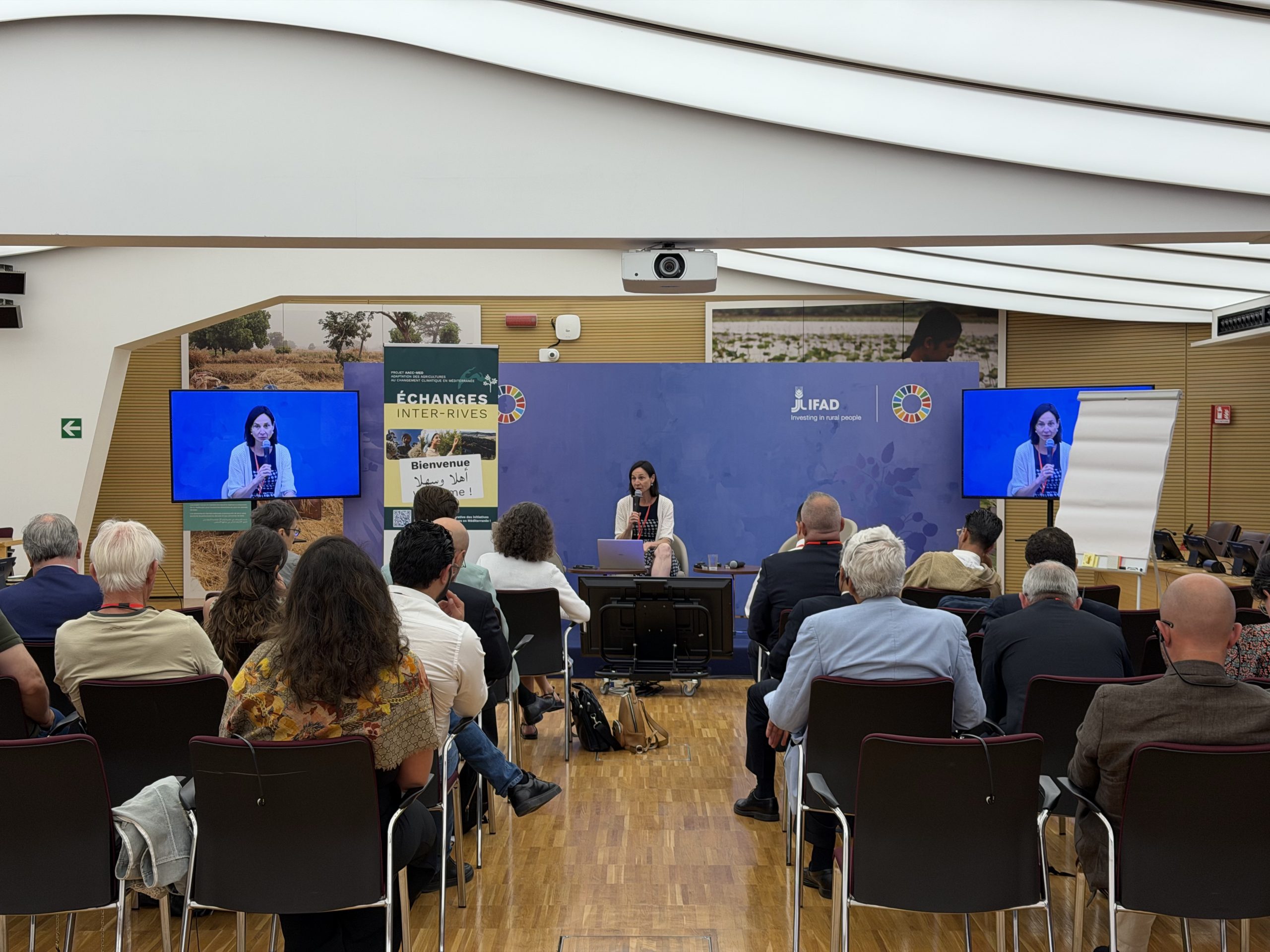
On 11 June, the FARM Foundation organised a multi-actor workshop at IFAD headquarters in Rome, in partnership with IFAD and the Agri-PDB Platform, on how to better mobilise and structure public and private finance for the adaptation of Mediterranean agriculture to climate change, while ensuring the inclusion of small-scale producers and the sustainable use of resources.
FARM and Agri-PDB Platform Multi-actor Workshop
Financing Adaptation of Agriculture to Climate Change
11 June 2026 | Rome, Italy
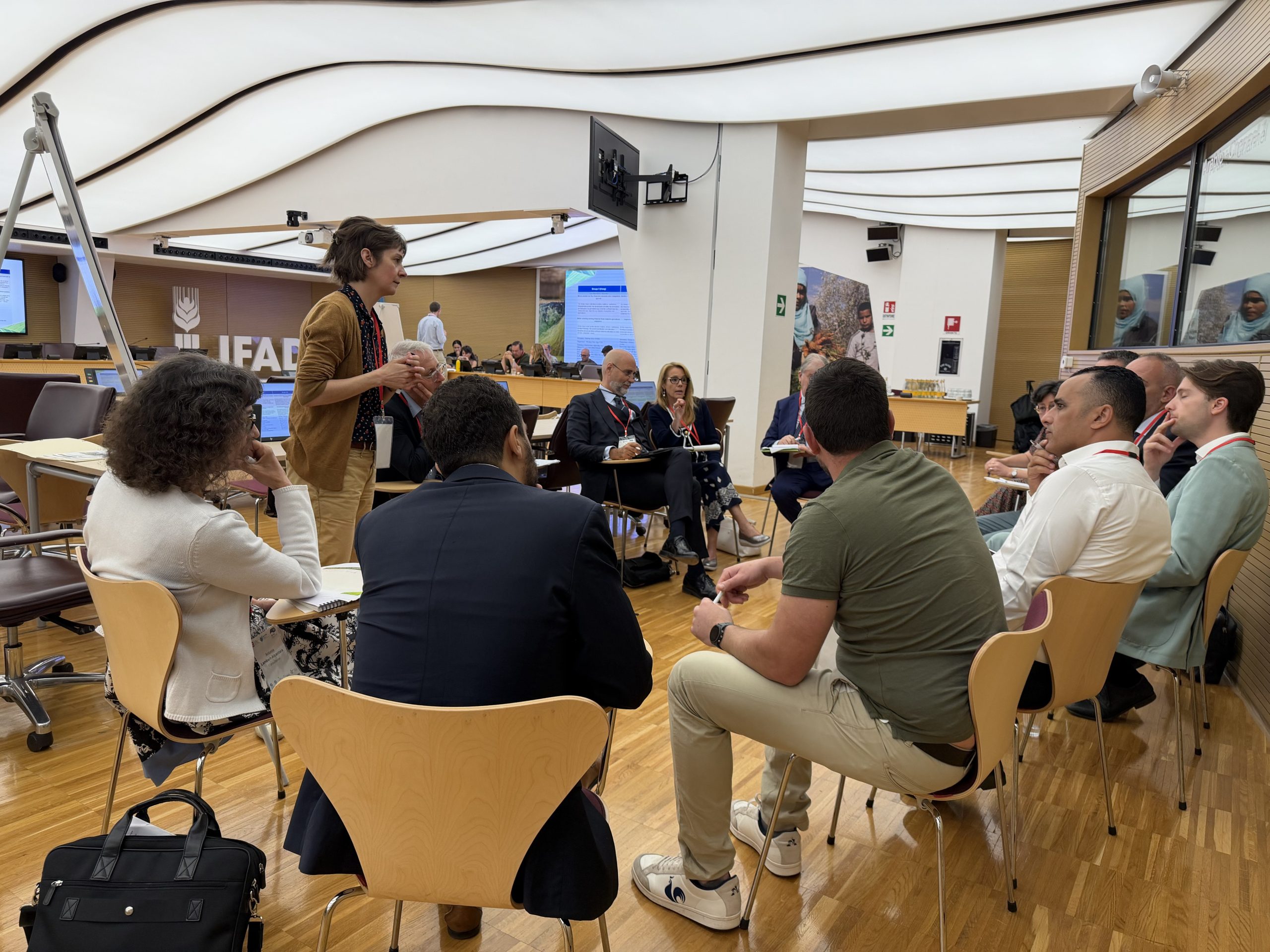
Bringing together farmers, financial actors, and representatives of academia and international organisations, three working groups explored three main issues: at the micro-level, how to better orient existing financial instruments towards agricultural adaptation (I), at the meso- and micro- level, how to improve access to finance for farmers (II), and at the systemic and structural level, how to favour long-term investments to accelerate the transformation of agricultural systems (III).
(I) The dialogue highlighted financial mechanisms currently exist but remain fragmented and sectoral, mainly due high financial access costs, insufficient collateral, all exacerbated by climate uncertainty.
Participants called for public and private actors to prioritize adaptation, develop financial products tailored for smallholders, and utilize contracts to support resilience throughout supply chains, use of blended finance and contractual mechanisms to de-risk investment and strengthen resilience across value chains.
(II) Discussions also stressed that agricultural finance in the Mediterranean still faces structural constraints, including the erosion of agricultural expertise among lenders, growing climate unpredictability, limited financial outreach in southern regions, and regulatory frameworks that do not sufficiently reflect agricultural cycles.
Participants called for closer cooperation between insurers and bankers to prioritize “active defence” insurance and blended finance, simplified financial and administrative procedures, and regulatory authorities prioritizing prudential ratios adapted to agricultural specificities.
(III) Discussions also highlighted that accelerating the transformation of agricultural systems requires a stronger link between finance, technical support, and collective action. Existing mechanisms remain too focused on material investments, while technical assistance is still underused. Participants stressed the need for better data and knowledge for both farmers and financial institutions, as well as regulatory frameworks that better accommodate agricultural realities. Participants called for stronger cooperation, more innovation across value chains, financial solutions combining insurance and blended finance, and ambitious public policies to support collective action and sustainable transformation.
The sessions proved the central role of public development banks and of the Agri-PDB Platform in advancing inclusive, climate-resilient, and sustainable food systems.
Agricultural and financial actors underscored that integrating agricultural and financial expertise is essential to better assess risk, design financial instruments that respond to farmers’ needs, and shape regulations that take agricultural dynamics into account.
In this regard:
- Public development banks are uniquely positioned to absorb financial risks, align financing with public policy priorities, mobilise additional private capital, and support agricultural transitions over the long term;
- The Agri-PDB Platform critically strengthens the technical capacities of public development banks through training, webinars, and peer-to-peer exchange, thereby supporting more sustainable financial access and more inclusive and resilient food systems.
Similar articles