

Country mission - Turning green ambition into finance for agroecology in Benin
Turning green ambition into finance for agroecology in Benin
17-18 April 2025 | Cotonou, Benin
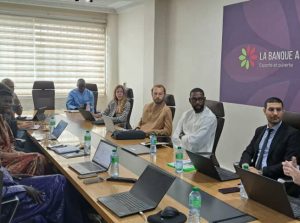
The Agri-PDB Platform conducted an identification mission with the Caisse des Dépôts et Consignation du Bénin (CDC Bénin) to explore how the institution can strengthen financing for agroecology. The mission formed part of the European Union-funded Investing in Livelihood Resilience and Soil Health in ACP Countries (ILSA) Programme, which supports public development finance institutions in advancing soil health, water management and the agroecological transition.
The discussions confirmed a strong alignment between CDC Bénin’s environmental ambitions and the Platform’s support offer. They also identified practical steps for turning those ambitions into a dedicated financing approach: develop a strategy, mobilize suitable resources, strengthen investment and risk-analysis tools, improve the traceability of funds, and build staff capacity through training and peer learning.

Mission at a glance
- Assess the feasibility of tailored Agri-PDB Platform support for CDC Bénin.
- Identify the skills, procedures and tools needed to finance agroecological projects.
- Explore how existing green-finance initiatives can more fully include sustainable agriculture.
- Strengthen risk assessment, monitoring, reporting and the traceability of funds.
- Define opportunities for technical assistance, training and exchange with experienced development finance institutions.
A distinctive public finance institution
Created in 2018, CDC Bénin is a specialized public financial institution with a mandate to support economic and social development. It mobilizes and manages regulated funds and long-term resources, which it uses to finance strategic projects in both the public and private sectors.
Its role complements that of commercial banks and decentralized financial systems. CDC Bénin can provide direct finance, take equity positions, offer guarantees and channel resources through partner financial institutions. This combination allows it to support large, structural investments while also reaching smaller projects and enterprises through banks, microfinance institutions and specialized public agencies.
In only a few years, CDC Bénin has become a significant actor in the national financial landscape. Its public-interest mandate, strong financial foundations and ability to work through multiple financing channels give it considerable potential to accelerate investment in sustainable agriculture.
Connecting agriculture to a wider investment mandate
CDC Bénin already supports the transformation of the national economy and has participated in agribusiness investments. It also works with institutions that support smaller enterprises and agricultural projects, creating opportunities to combine finance, guarantees and business-development support.
The mission nevertheless found that agricultural finance was not yet organized around a dedicated institutional strategy. Projects were assessed through the CDC’s general investment procedures, while support to the sector took place through individual transactions and partnerships.
Agroecology offers a way to connect these activities within a clearer framework. A dedicated approach can help CDC Bénin identify priority value chains, define eligible practices and decide when to finance directly or work through partner institutions. It can also align agricultural investments with national objectives for climate resilience, biodiversity, food security and rural economic development.
Building on a strong environmental foundation
CDC Bénin has already established an environmental policy that integrates climate considerations, resource efficiency, territorial development, stakeholder dialogue and the monitoring of commitments. Its broader environmental, social and governance framework covers risk assessment, responsible investment, performance indicators and follow-up.
The institution is also working with the African Development Bank to develop a green financing vehicle. This initiative is designed to mobilize additional resources, strengthen sustainable-finance capabilities, build a pipeline of green projects and improve the monitoring of climate-finance impacts.
The next opportunity is to ensure that agroecology is fully represented within this growing green-finance architecture. Sustainable farming, agroforestry, biodiversity protection, water management and climate adaptation can generate environmental and social benefits, but financial institutions need clear criteria and credible project pipelines before these activities can be financed at scale.
What CDC Bénin identified as priorities
During the mission, CDC Bénin highlighted four connected areas for collaboration:
- A financing strategy for agroecology: Define the institution’s priorities for direct investment and partnerships with banks and decentralized financial systems.
- Resource mobilization: Prepare credible financing proposals and connect with partners interested in supporting agroecological investment.
- Operational tools: Strengthen project analysis, monitoring, reporting and fund-traceability systems, including their integration into digital workflows.
- Institutional capacity: Equip staff and partner institutions with the knowledge and procedures needed to assess and finance sustainable agriculture.
Together, these priorities provide a pathway from high-level environmental commitments to daily investment decisions.
Making investment more traceable and risk-aware
Agroecological and climate-smart agriculture projects involve risks that differ from those of conventional investments. Climate exposure, changes in production practices, market access and the time required to generate environmental benefits all need to be reflected in project appraisal.
The proposed support therefore includes mapping the risks associated with sustainable agriculture, developing an assessment framework and examining CDC Bénin’s exposure across its portfolio. Existing environmental and social procedures can be adapted with indicators for agroecological performance, while monitoring systems can track both the use of funds and the results achieved.
This work can also improve reporting to climate and development partners. Clear eligibility criteria, traceability and impact indicators make it easier to demonstrate that resources are reaching their intended purpose and contributing to measurable environmental and development outcomes.
Reaching more projects through financial partners
CDC Bénin’s partnerships with banks and decentralized financial systems provide an important route for reaching smaller agricultural enterprises and producers. A common analytical framework could help these institutions identify eligible projects, apply consistent criteria and report results to CDC Bénin.
A training-of-trainers approach was proposed so that CDC Bénin can share knowledge and tools with its financial partners. This can create a multiplier effect: strengthening one institution while building wider capacity across the country’s agricultural finance ecosystem.
Peer-to-peer exchange with experienced agricultural development banks can complement this work. Practical lessons from institutions that already finance agroecology can help CDC Bénin refine its strategy, avoid common implementation barriers and adapt proven approaches to the national context.
Looking ahead: a practical support pathway
The mission resulted in a proposed programme of support covering strategy development, resource mobilization, fund traceability, risk management, monitoring and evaluation, staff capacity and specialized investment tools. The Platform can contribute through technical expertise, targeted studies, training and exchanges with other public development institutions.
Resource mobilization will remain led by CDC Bénin, with the Platform helping to connect the institution to potential partners and strengthen the preparation of financing proposals. This distinction keeps the support focused on building lasting institutional capacity and creating the conditions for new investment.
By linking green finance with agroecology, CDC Bénin can help make sustainable agriculture a more visible and investable part of Benin’s economic transformation. The mission laid the groundwork for a partnership designed to move from environmental ambition to practical, traceable and scalable finance.