

Country mission - Strengthening rural finance for greener and more inclusive food systems in Mozambique
Strengthening rural finance for greener and more inclusive food systems in Mozambique
6-9 July 2026 | Maputo, Mozambique
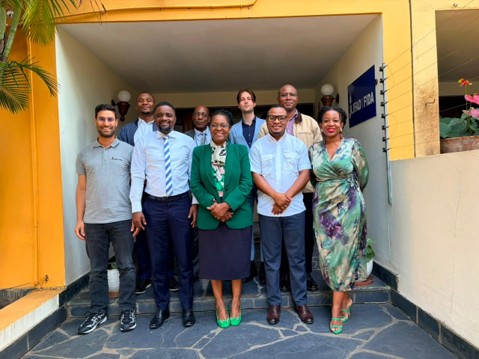
The Agri-PDB Platform conducted a four-day mission to Mozambique under the European Union-funded Investing in Livelihood Resilience and Soil Health in ACP Countries (ILSA) Programme. The mission brought together public institutions, development finance actors, commercial banks, microfinance institutions and development partners to explore how finance can better serve smallholder farmers, rural enterprises and community-based organizations.
The consultations revealed a strong convergence of priorities across the country’s rural finance ecosystem. Institutions are looking for practical support on agroecology, climate and sustainable finance, risk management, digital transformation and the design of financial products adapted to rural clients. This shared agenda creates an opportunity to move from isolated institutional support towards coordinated action across the ecosystem.
Mission at a glance
- Map the principal actors, products and support mechanisms in Mozambique’s agricultural and rural finance landscape.
- Identify opportunities to align the Agri-PDB Platform’s services with national priorities, IFAD operations and other partner initiatives.
- Assess demand for technical assistance, training, peer learning and knowledge exchange.
- Develop a preliminary pipeline of collaboration to strengthen inclusive, resilient and sustainable agrifood finance.
Why rural finance matters in Mozambique
Agriculture is central to livelihoods and the national economy. Approximately 65 per cent of the population lives in rural areas, while agriculture generates a large share of household income and employment. Yet producers and rural enterprises remain highly exposed to extreme weather, low productivity, limited infrastructure and restricted access to markets and finance.
Serving rural clients is challenging for financial institutions. High transaction costs, dispersed populations and perceived agricultural risks can make urban markets more attractive. Stakeholders also highlighted limited digitalization, a shortage of products tailored to agricultural cycles, gaps in institutional capacity and the need for stronger climate-risk management.
At the same time, digital financial services and mobile platforms offer promising ways to extend services to underserved communities. Community-based finance structures, including savings and credit associations, can also help connect rural households to the formal financial system when supported by sound governance, appropriate regulation and capable financial intermediaries.
A distinctive development-finance ecosystem
Mozambique is developing a public development bank, but its current rural finance architecture already brings together a wide range of institutions through the Umbrella Fund Manager. This national wholesale financing mechanism channels public and partner resources to rural beneficiaries through participating financial institutions.
Within this ecosystem, the Fund for Support for Economic Rehabilitation (FARE) manages and oversees the facility on behalf of the Government. Moza Banco administers credit lines and works with financial intermediaries, while Gapi-SI combines finance, guarantees, technical assistance and capacity development for rural enterprises and underserved communities. Microfinance institutions and community-based organizations provide an essential last-mile connection.
The mission confirmed that these actors perform many functions associated with agricultural development finance: wholesale funding, risk sharing, rural outreach, institutional strengthening and support to populations that conventional finance often struggles to reach.
What stakeholders highlighted
Across the consultations, six recurring areas emerged:
- Agroecology and sustainable value chains: Financial institutions want clearer criteria, practical taxonomies and investable pipelines that can translate agroecological ambition into financeable activities.
- Climate and green finance: Institutions need tools to identify climate risks, assess green investments and integrate environmental considerations into lending and investment decisions.
- Risk management: Agricultural portfolios are increasingly affected by droughts, floods and macroeconomic pressures. Stronger risk frameworks, early-warning systems and peer exchange can help institutions respond.
- Digital transformation: Digital processes can improve data quality, reduce transaction costs and expand rural outreach, but institutions need systems, staff capacity and digital literacy among clients.
- Financial inclusion: Tailored products are needed for smallholders, rural micro, small and medium-sized enterprises, women, young people and community finance organizations.
- Institutional capacity and peer learning: Stakeholders expressed strong interest in training, technical support and exchanges with institutions facing similar challenges.
Building partnerships for impact
The Platform engaged with FARE, the Fund for Agricultural Promotion and Rural Extension, Gapi-SI, Moza Banco, the Mozambican Association of Microfinance Operators, Microbanco Confianca and Futuro Microbanco. Discussions also involved the European Union Delegation, the French Development Agency, the United Kingdom’s Foreign, Commonwealth and Development Office, UNICEF and the IFAD Country Office.
These exchanges identified complementarities between national priorities, ongoing development programmes and the Platform’s capacity-building and knowledge-sharing offer. Several institutions expressed interest in regional training on agroecology and climate finance, peer-to-peer exchanges, green finance tools, digital solutions and stronger approaches to agricultural risk.
Looking ahead: an ecosystem-wide approach
The mission produced a preliminary pipeline of collaborative activities. Proposed next steps include training on agroecology and climate finance, peer exchange on wholesale lending and rural outreach, stronger climate-risk tools, support for green investment pipelines, and knowledge sharing on digital and community-based finance.
The most important lesson is that many institutions are confronting the same barriers. Coordinated activities can therefore create wider impact than a series of disconnected interventions. Working with the IFAD Country Office and national and international partners, the Agri-PDB Platform will help prioritize actions that match the Platform’s mandate, technical capacity and available resources.
This mission laid the foundation for a structured partnership with Mozambique’s rural finance ecosystem, with a shared goal: expanding access to finance while supporting more resilient, inclusive and sustainable agrifood systems.