

Peer-to-Peer (P2P) expertise
Enhancing Knowledge Sharing and Collaboration Among Agricultural PDBs Through the Agri-PDB Platform
Information on successful approaches in agricultural finance is not consistently or timely shared among public development banks (PDBs worldwide). The Agri-PDB Platform addresses this gap by providing a structured and systematic space for peer-to-peer exchange among member banks.
Through this platform, PDBs can access up-to-date knowledge, learn from each other’s practical experiences, and gain insights into effective business models. Peer-to-peer collaboration is a core service of the Agri-PDB Platform, enabling members to share proven practices, success stories, and technical expertise—particularly in the areas of green and inclusive finance. By facilitating these targeted exchanges, the platform strengthens collective learning and supports the adoption of effective, scalable approaches across Agri-PDBs.
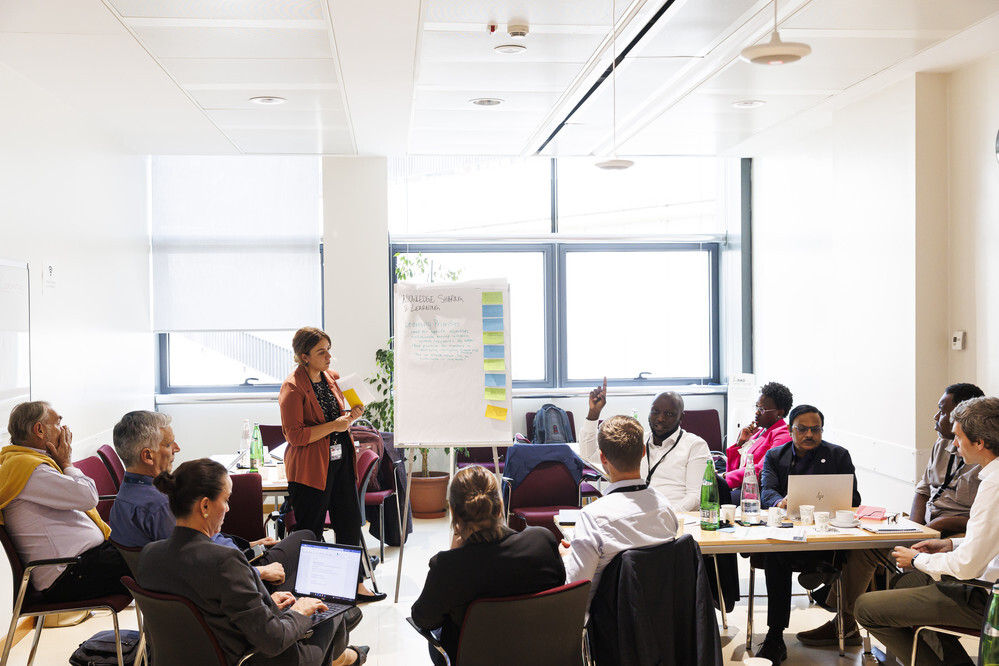
The Agri-PDB Platform will act as a facilitator to share knowledge (existing and produced by the Platform) and accelerate learning among PDBs. This will also provide an opportunity for Agri-PDBs to collaborate and leverage each other’s strengths. The platform will also provide access to a wide range of resources, such as technical expertise, study trips and funding opportunities. Additionally, the Agri-PDB Platform will create a network of technical partners and stakeholders, helping to foster synergies and collaboration.
Peer-to-Peer Learning in Action
FIRA-CAM-ADBC
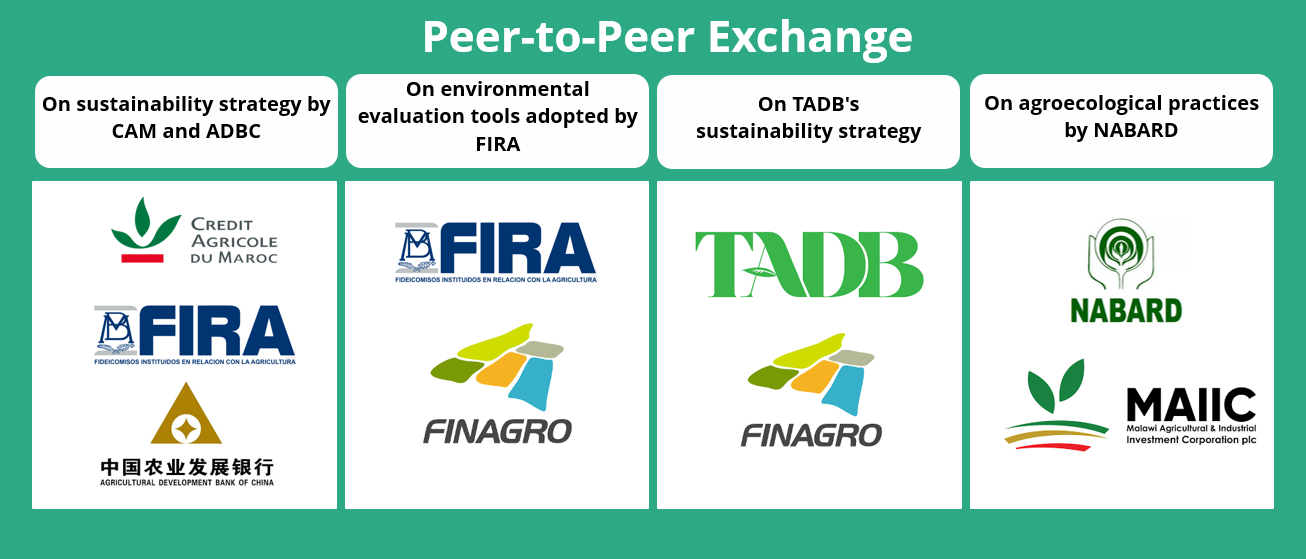
In Q1 2023, as part of the development of its new sustainability strategy, FIRA participated in a 60-minute peer-to-peer exchange organized by the Agri-PDB Platform with support from AFD. During the session, FIRA’s Deputy Director for the Environment exchanged with peers from CAM (Morocco) and ADBC (China) to identify international best practices. Discussions focused on five priority areas—communication, funding, governance, risk management, and programmes and projects—with particular emphasis on mobilising resources for sustainable finance. Funding options explored included international climate funds such as the Green Climate Fund (GCF) and the Global Environment Facility (GEF), as well as collaboration with multilateral and bilateral development banks (e.g. Inter-American Development Bank, KfW). The exchange also covered board-level involvement in sustainability strategies, project selection and taxonomies, financial conditions such as subsidies or preferential rates, and approaches to communicating sustainability efforts through ESG websites, annual reports, and social media. Overall, the session provided FIRA with concrete inputs to strengthen product design, governance arrangements, and stakeholder engagement under its new sustainability framework.
FIRA-FINAGRO
Peer-to-peer exchanges benefit banks with similar characteristics, whether they come from the same region, share a common language and social context, or operate under the same business structure (first-tier, second-tier, or mixed). A great example of this is the exchange between FIRA (Mexico) and FINAGRO (Colombia)—two second-tier banks in Latin America. two second-tier agricultural PDBs in Latin America. The exchange focused on tools to measure the environmental impact of agricultural loan portfolios. FIRA shared a parametric assessment tool developed with AFD, Carbon Trust, CIRAD, and El Buen Socio, which categorizes investments—such as energy efficiency, sustainable agriculture, water management, and renewable energy—and estimates their environmental impacts in line with the Sustainable Development Goals. FINAGRO contributed its own experience applying similar approaches in renewable energy and agricultural value chains. The exchange highlighted how regional collaboration, grounded in local data, research partnerships, and pilot testing, can help development banks strengthen impact measurement, improve transparency, and scale up best practices in sustainable finance.
FINAGRO-TADB
On 4 July 2025, the Agri-PDB Platform convened a peer-to-peer exchange between FINAGRO (Colombia) and the Tanzania Agriculture Development Bank (TADB), bringing together senior representatives from both institutions. The session enabled FINAGRO to learn from TADB’s experience in financing long-term agricultural transformation, with a particular focus on capacity building and cost-efficient monitoring and evaluation (M&E) systems. TADB shared its comprehensive development finance model—combining long-term and concessional financing with non-financial support such as research, policy advisory, and climate-smart agriculture investments—as well as lessons from its four-year partnership with AFD, which strengthened credit guarantees, climate risk management, and environmental and social systems. In response to FINAGRO’s questions on the cost of impact tracking, TADB highlighted practical M&E solutions, including splitting responsibilities between business and M&E units, using project sampling to reduce costs, and digitising data collection. The exchange provided FINAGRO with concrete, adaptable approaches to strengthen its own monitoring framework while supporting long-term, climate-resilient agricultural finance.
NABARD-MAIIC
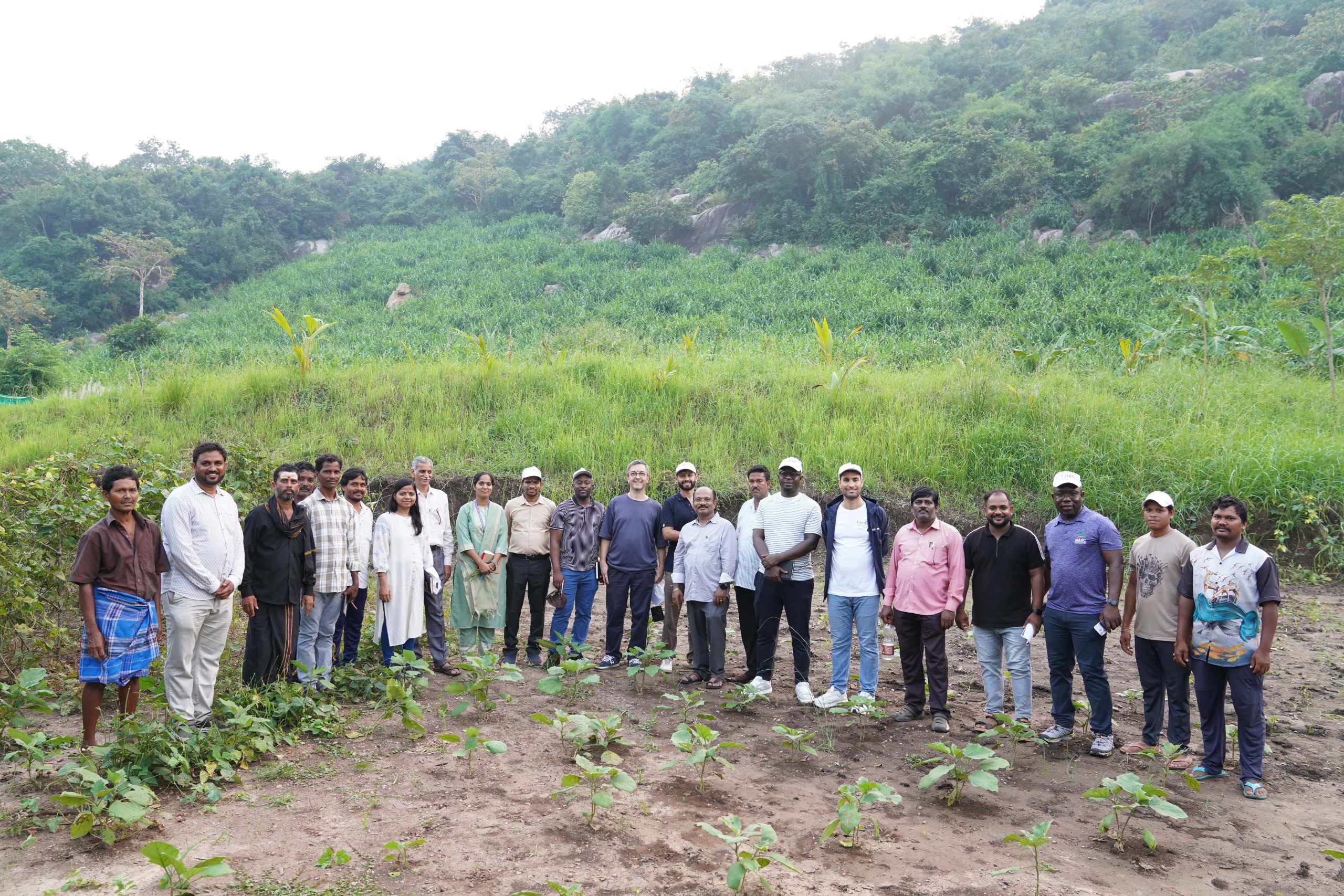
From 3–7 November 2025, the Agri-PDB Platform organized a peer-learning mission to India with the Malawi Agricultural and Industrial Investment Corporation (MAIIC), in collaboration with the IFAD Country Office, to learn from the National Bank for Agriculture and Rural Development (NABARD). Combining institutional exchanges in Mumbai with field visits in Andhra Pradesh, the mission explored how NABARD links rural institutions, development programmes, and financial instruments to support agroecological and climate-resilient rural development. NABARD shared practical experience in natural resource management, tribal development, and natural farming—particularly through its JIVA Programme—while field visits showcased community-based agroecological practices, strong farmer organizations, women-led self-help groups, and integrated livelihood models. The exchange highlighted the value of South–South peer learning in strengthening community ownership, women’s participation, diversified production systems, and institutional capacity, providing concrete insights to support MAIIC’s emerging agroecology-aligned investment strategy and laying the groundwork for continued collaboration through the Agri-PDB Platform.